If you’ve ever bought a felting mat that turned into a sad, holey pancake after just a few projects — you’re not alone. It’s one of the most frustrating parts of needle felting: finding a surface that actually lasts.
You start with a fresh foam block, full of optimism, only to end up picking bits of it out of your wool a week later. The truth is, not all felting mats are created equal. And the one you choose can make or break your project (and your needles).
So before you hit “add to cart” on yet another mat, here’s what you really need to know.
The Real Job of a Felting Mat
Think of your mat as the unsung hero of your felting table. It cushions each stab of the needle, protects your work surface, and helps you control your project’s density.
But the wrong mat can:
- Break needles faster than you can replace them.
- Embed fibers so deeply that your next project picks up old colors.
- Warp your shapes, especially if it’s too soft or uneven.
In other words, it’s not “just a mat” — it’s half the reason your felting looks smooth (or doesn’t).
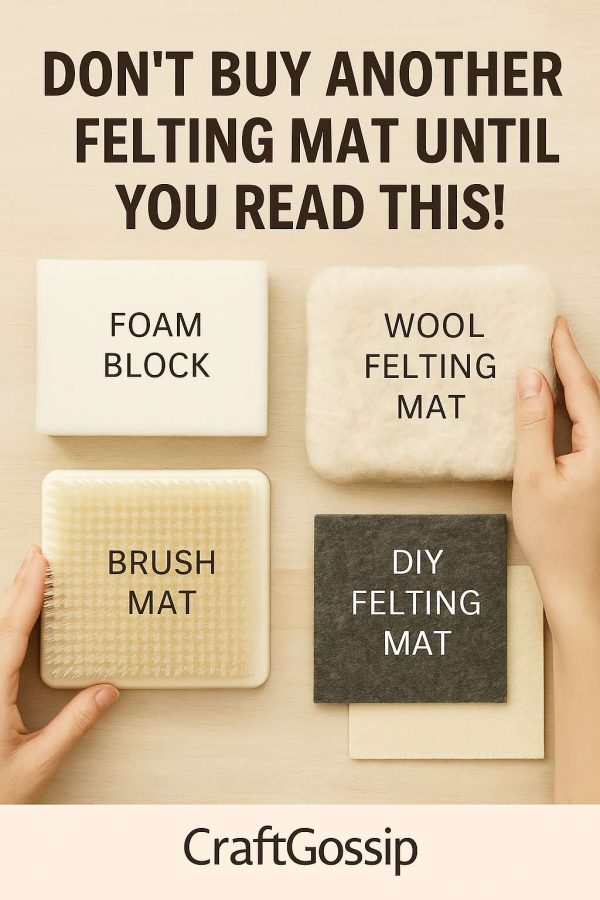
The Foam Block — Cheap, Cheerful, and Temporary
We all start here. Foam mats are affordable, easy to find, and work perfectly for quick projects. But they have one major flaw: they don’t last.
After a few sessions, foam starts to compress and crumble, leaving your surface uneven and full of holes. That means your needle starts bending or snapping more easily.
Best for: beginners, travel kits, and short-term use.
Not ideal for: long-term sculpting, fine detail work, or heavy felting.
Pro Tip: Stack two foam blocks together and rotate them often — you’ll double their life.
Wool Felting Mats — The Upgrade You’ll Thank Yourself For
Once you’ve been felting for a while, you’ll wonder how you ever survived without one of these.
Made from dense layers of natural wool, these mats provide a gentle bounce that protects your needle tips and keeps fibers from sticking. They also last much longer than foam and look gorgeous on your workspace (bonus points if you’re posting photos!).
Why we love them:
- They’re quiet to work on (no “thud” sound).
- Fibers don’t embed permanently — you can brush them off easily.
- They’re eco-friendly and smell faintly of real wool (in the best way).
Best for: regular felters, artists who love natural materials, and anyone tired of replacing foam every month.
Brush Mats — Not Just for Beginners
Brush mats look odd at first — like something you’d use for cleaning dishes — but they’re surprisingly effective for flat pieces like flowers, appliqués, or surface designs.
They keep your fibers lofted so you can felt evenly without compressing too much. That’s perfect for thin projects where you don’t want your wool to shrink too tightly.
Best for: 2D felting, fabric embellishments, and Nuno-style texture work.
Avoid if: you’re sculpting figures — brushes don’t support deep stabbing.
DIY Mats — Great in a Pinch
If you’re crafty (and of course you are), you can easily make your own mat.
Try these ideas:
- Folded wool blanket — layered and felted down for firmness.
- Stacked felt sheets — dense industrial felt makes a great reusable base.
- Old yoga mat or cork board — cut to size and wrapped in wool.
They won’t last forever, but they’re a fun, sustainable experiment.
How to Know When It’s Time to Replace Your Mat
Your mat is begging for retirement when:
- It’s visibly dented or uneven.
- Your needle hits a hard spot or “bottoms out.”
- It sheds foam or fibers onto your work.
- You can see the ghosts of past projects embedded in it.
If that sounds familiar, do yourself (and your needles) a favor — upgrade now.
My Personal Setup
For daily felting, I keep two mats:
- A large wool mat for sculpting and general work.
- A small foam block for travel or testing colors.
Switching mats based on project size keeps both in good shape longer.
Quick Mat Care Tips
- Rotate your mat every few sessions.
- Use a lint roller or firm brush to remove stray fibers.
- Store it flat, away from moisture or heat.
- Avoid stabbing in the same spot every time.
Taking care of your mat means it’ll take care of your needles.
So… Which One Should You Buy?
If you’re felting often, skip the foam and go straight for a dense wool mat — it’ll last for years and improve your control dramatically.
If you’re still experimenting or teaching workshops, foam and brush mats have their place. The trick is to know when to use which one.
The right surface will make every stab smoother, every project neater, and every felting session far more enjoyable.