There’s nothing more satisfying than taking raw fleece straight from the sheep and turning it into something beautiful — whether that’s a soft felted scarf, a warm pair of slippers, or a skein of handspun yarn.
Working with raw wool isn’t difficult once you understand the process. It just takes a little time, patience, and a few good cups of tea. This guide walks you through how to skirt, wash, dye, and card raw wool so it’s clean, soft, and ready for your next felting or spinning project.
What You’ll Need
Supplies:
- Raw fleece (from local farms or fiber suppliers)
- Rubber gloves and apron
- Mesh laundry bags
- Mild dish soap or wool wash (like Eucalan or Unicorn Fiber Wash)
- Large tubs or buckets
- Hot water (not boiling)
- Towels or drying rack
- Dye supplies (food coloring, acid dye, or natural dyes)
- Carders or drum carder
Step 1: Skirting the Fleece
Skirting is the process of removing the unusable parts of the fleece before washing.
Spread your raw fleece out on a clean surface or mesh skirting table.
Remove:
- Dirty edges (often called “tags”)
- Vegetable matter (hay, seeds, burrs)
- Short or brittle fibers
- Stained or heavily matted sections
You want to keep only the clean, long, springy locks. If it smells strongly of lanolin or the barnyard — don’t worry, that’s part of the charm. It washes out beautifully.
Pro tip: Store the skirted fleece in mesh bags to keep it breathable and pest-free before washing.
Step 2: Washing (Scouring) the Wool
This step removes lanolin, dirt, and oils from the fleece without felting it.
Fill a tub with hot water
Use water around 60–70°C (140–160°F) — too cool, and the lanolin won’t dissolve.
Add a few drops of dish soap or dedicated wool wash.
Add the fleece gently
Place your fleece inside a mesh bag or laundry bag and lower it slowly into the water.
Do not agitate or stir — agitation and temperature shock cause felting.
Let soak for 15–20 minutes, then gently lift the bag out, drain, and refill your tub with clean hot water. Repeat until the water runs mostly clear.
You may need 2–3 washes and one rinse.
Drain and dry
Gently press out excess water. Lay the fleece flat on a towel or drying rack in a warm, airy space. Avoid direct sun or heat sources.
Once dry, you’ll be left with soft, clean locks ready for dyeing or carding.
Step 3: Dyeing the Wool
Now for the fun part — adding color!
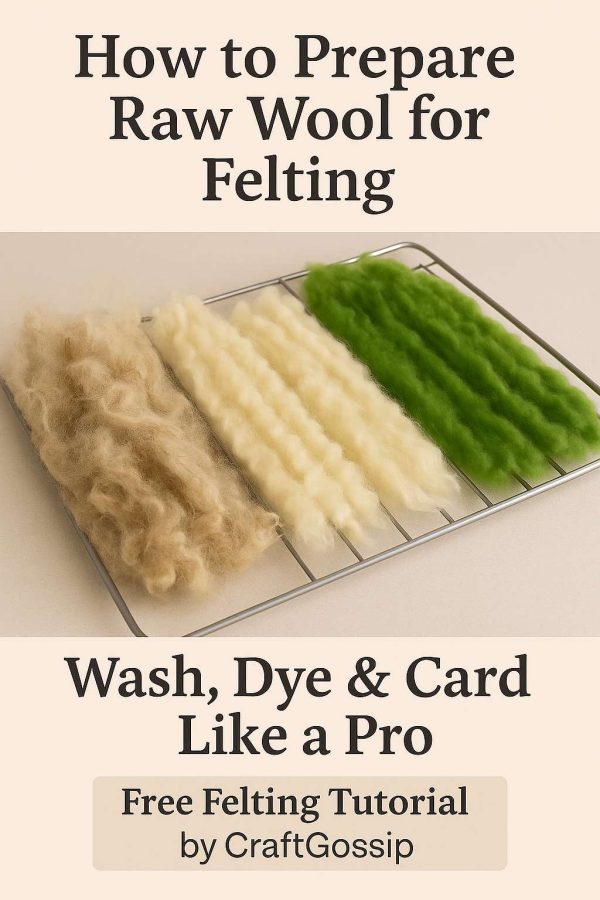
You can dye your wool before or after carding, depending on your preference. Dyeing locks individually gives more control and blended tones, while dyeing batts or roving creates even color.
Dye Options
- Food Coloring or Kool-Aid: Safe and easy for beginners.
- Acid Dyes: Professional-grade colors that bond permanently to protein fibers.
- Natural Dyes: Onion skins, turmeric, eucalyptus, or madder root for earthy tones.
Basic Dyeing Method
- Soak your wool in a warm vinegar bath (1 cup vinegar to 4 L water) for 30 minutes.
- Mix your dye in a pot with hot water and stir gently.
- Add the pre-soaked wool.
- Heat gently for 20–30 minutes until water clears.
- Let cool, rinse, and air dry.
The result: beautifully colored wool that’s still soft and ready to card.
Step 4: Carding the Wool
Carding aligns the fibers and removes tangles, turning your washed fleece into smooth, airy batts or rolags.
Hand Carders
Best for small batches. Load the carders with wool, then brush them gently in opposite directions to align fibers. Transfer from one carder to the other until fluffy and even.
Drum Carder
Perfect for larger amounts. Feed the fleece through slowly, layering colors if desired. Remove the batt and roll it up — it’s ready for felting or spinning!
Pro tip: Blend different colors or fibers (like silk or alpaca) for depth and texture.
Step 5: Storage & Next Steps
Keep your clean, carded wool in breathable cotton bags or pillowcases.
Avoid plastic storage — trapped moisture can cause mildew or attract moths.
Your wool is now ready for:
- Wet felting scarves, slippers, or sculptures
- Needle felting toys or art
- Hand spinning into yarn
Common Mistakes to Avoid
- Agitating too much while washing – Causes felting before you even start.
2. Water temperature shock – Moving wool from hot to cold suddenly causes irreversible felting.
3. Overcrowding your tub – Wool needs space for the lanolin to release.
4. Using harsh detergents – Strips fibers and weakens them.
5. Skipping skirting – Leaves debris that’s impossible to remove later.
Why You’ll Love Doing It Yourself
Processing your own wool gives you a connection to the craft that’s impossible to buy. You’ll understand your fibers, control your colors, and enjoy the meditative rhythm of felting from fleece to finish.
Plus, there’s nothing more rewarding than saying:
“I made this — from raw wool.”