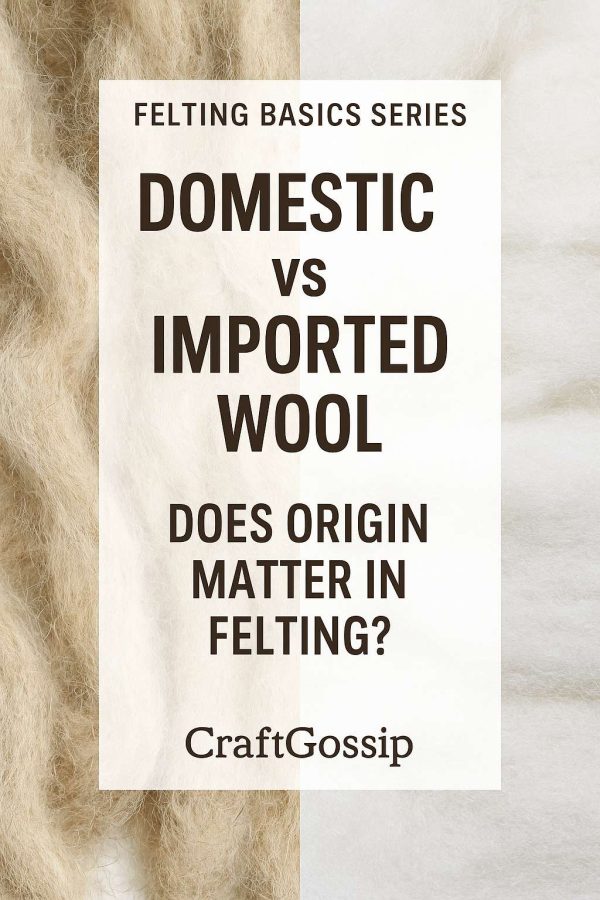
Every felter has their favorites — that one roving supplier, that particular batt that just feels right in your hands. But have you ever noticed how one batch of wool felts like a dream while another (supposedly the same breed!) feels stiffer, slower, or even squeaky?
The secret often lies in where the wool comes from.
Whether you’re buying Australian Merino, New Zealand Corriedale, or a small-farm Romney from your local fiber festival, the origin of your wool can influence everything from felting speed to finish. And understanding that difference isn’t just about results — it’s also about sustainability, ethics, and supporting the kind of fiber industry you believe in.
Let’s explore how domestic vs imported wool compares in texture, quality, and felting performance, and why “where it’s grown” might matter more than you think.
Understanding Wool Origins
Before diving into felting differences, it helps to understand how geography and climate shape the wool itself.
- Domestic wool generally means fiber sourced from your own country or region (for example, Australian wool if you’re in Australia, or U.S. wool if you’re in the States).
- Imported wool refers to fiber brought in from abroad — most commonly from New Zealand, South America, or the UK.
Each environment, breed, and processing standard plays a role in how the fiber performs.
Domestic Wool – Local Character and Traceability
Domestic wools tend to have personality — a little more variety from batch to batch, but also more connection to the farm and the animals behind the fleece.
Locally produced fibers are often small-batch and minimally processed, which means the scales on the fibers remain more open and grippy — perfect for felting.
Why Felters Love Domestic Wool:
- Easier to felt: Less processing means better fiber “grab.”
- Unique texture: Each farm or mill gives subtle character.
- More ethical sourcing: Easier to trace and ensure animal welfare.
- Supports local fiber producers: Keeps traditional farms thriving.
Potential Downsides:
- Inconsistent quality between suppliers.
- Limited access to fine or luxury breeds depending on region.
- Sometimes more expensive due to smaller-scale production.
If you’ve ever bought a batt from a local spinner and felt it come alive under your hands — that’s the magic of domestic wool. It’s less “perfect,” but far more soulful.
Imported Wool – Consistency and Variety
Imported wool, especially from large producers like New Zealand or South America, is often processed at industrial scale, ensuring consistency across large batches.
That means if you find a type you love, you can reorder it and get the exact same texture and behavior every time — a huge advantage for commercial makers or teachers.
Why Felters Love Imported Wool:
- Highly consistent: Uniform fiber prep, color, and micron count.
- Wide breed variety: Easier to access specific types like Merino, Corriedale, or Shetland.
- Cleaner finish: Industrial scouring removes all lanolin and debris.
- Economical: Large-scale production keeps costs reasonable.
Potential Downsides:
- Over-processing can smooth out fiber scales, slowing felting.
- Longer transport chain = higher carbon footprint.
- Less transparency about farm and welfare practices.
Imported fibers are great for beginners or production work — they’re clean, easy to handle, and reliable. But for artisan projects, you might miss that “wooly bite” that local batches retain.
Felting Performance – Domestic vs Imported Wool
| Feature | Domestic Wool | Imported Wool |
| Felting Speed | Fast (more open scales) | Moderate (more processed) |
| Texture | Varied, rustic | Smooth, consistent |
| Finish | Natural, tactile | Polished, refined |
| Sustainability | Lower transport footprint | Higher global footprint |
| Cost | Moderate to high | Budget-friendly options available |
| Best For | Artisan and textured felting | Beginners and production projects |
How Climate and Geography Affect Wool
Wool doesn’t just reflect the sheep — it reflects its landscape.
- Cold, dry climates (New Zealand, Scotland) produce longer, finer fibers with high luster.
- Mild, wet climates (Australia) yield ultra-soft, dense fleeces like Merino.
- Mixed pasture farms (U.S., UK) often produce coarser but springy wools like Romney and Shetland.
Even nutrition and soil can influence crimp and elasticity, meaning no two “Corriedales” are exactly the same worldwide.
Blending Domestic and Imported Wool
For many felters, the best results come from mixing both — local texture with imported reliability.
- Use domestic wool for your base layer or structural core.
- Use imported wool for smooth finishing or color detailing.
- Combine natural local tones with bright imported dyes for contrast.
This combination gives you the best of both: the lively texture of local fiber with the consistent performance of global staples.
Ethical and Environmental Factors
Today’s felters are more conscious than ever about sustainability. Choosing domestic wool often means supporting small farms that prioritize ethical treatment and regenerative grazing.
Domestic Wool Advantages:
- Lower carbon footprint (no overseas shipping).
- Direct relationships with farmers.
- Transparency in shearing and mulesing-free practices.
Imported Wool Advantages:
- Broader access to certified ethical sources (like ZQ Merino or Responsible Wool Standard).
- Often cleaner and more refined due to professional processing.
The key is to ask questions and buy from suppliers who share your values — whether they’re a local shepherd or an international mill.
Choosing the Right Wool for Your Felting Style
| Your Goal | Recommended Choice | Why |
| Fast felting, rustic texture | Domestic wool | Grippy, less processed, faster results |
| Smooth, consistent finish | Imported wool | Uniform, cleaner, easy to control |
| Eco-conscious, local sourcing | Domestic wool | Supports small farms, low transport |
| Bulk or teaching use | Imported wool | Affordable, reliable, large supply |
| Mixed media or experimental felting | Blend both | Texture + consistency combo |
Pro Tip: Try a Side-by-Side Test
If you’ve never compared them, take two small tufts — one domestic, one imported — and felt them under the same conditions.
You’ll immediately feel the difference in resistance, texture, and finish. The domestic one will likely grab faster, while the imported one will feel smoother and more refined when done.
Domestic and imported wools both have their place in your felting toolkit. Local fibers bring authenticity, texture, and connection to your craft community. Imported wools bring accessibility, predictability, and an incredible range of color and breed options.
The beauty of felting is that there’s no single “right” choice — just the fiber that feels right for you. Try both. Mix them. Support your local farms, but don’t feel guilty for loving a soft Merino roving from halfway across the world.
At the end of the day, it’s all about the joy of wool in your hands — and the story behind every strand.


Leave a Reply